Industry practice
Art Programmes for New-Construction Luxury Developments
How developers, sales teams and art advisors collaborate on art programmes for new-construction luxury residences, from the first design meeting to the final closing.
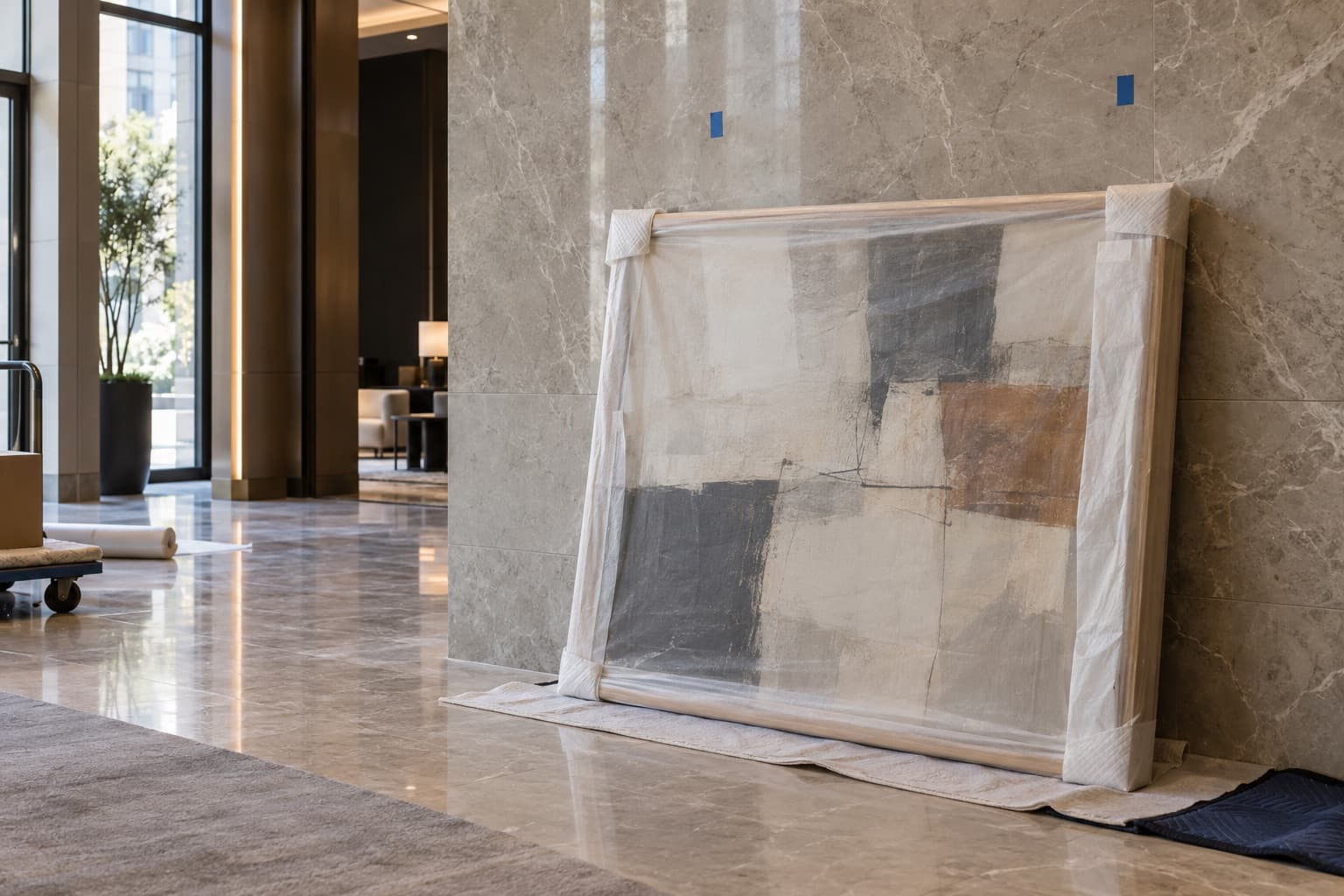
On cultivating judgment, context and a more thoughtful life with art.
Developers at the top of the U.S. market have moved art programming from the soft-cost budget to the marketing budget, alongside the sales centre, the model residence, the staging and the public-relations campaign. The shift reflects a recognition that art programmes now do real work in differentiating a property at the top of the market, where comparable square footage, finish level and view leave few other ways to make a listing feel specific.
The 2026 Art Basel and UBS Global Art Market Report notes that the residential development market is the fastest-growing client segment for independent art advisors in the United States, ahead of family offices and corporate collections. The reason is straightforward: a development is a single client with a defined budget, a defined timeline and a defined campaign window, which is the engagement shape advisors are best placed to serve.
“A new-construction art programme is a marketing investment, not a decoration budget, and is tracked separately from interior staging.”— The collector's note
The three roles
A new-construction art programme has three distinct roles. The first is the curator or advisor, who defines the direction, identifies the works, manages provenance, authentication and insurance, and writes the programme plan. The second is the installation partner, who handles transport, hanging, lighting, condition reporting, rotation and removal. The third is the developer, sales team or interior designer, who integrates the programme with the rest of the marketing.
The three roles can sit with the same firm, but they almost always sit with different specialists. A curator who also does installation typically delivers a weaker programme than a curator who focuses on the direction and partners with a separate installer.
The programme plan, in writing
A credible programme is set out in a written plan that names the direction, the works or the categories of work, the rotation, the transport, the installation, the lighting, the condition reporting and the removal. The plan also sets out the budget: art rental or short-term loan, transport, installation, insurance, lighting, rotation, removal and any conservation. The plan is reviewed quarterly and updated as the campaign progresses.
A programme without a written plan is a programme that drifts. The works that look strong in week one may look tired in week twelve, and the lighting that was specified for the first installation may not survive the developer's changes to the model. A written plan is the document that keeps the programme on track.
Selecting works for the programme
The selection criteria for a development programme are different from the selection criteria for a private collection. The works need to be visually strong at first impression, since buyers form a view in the first ten seconds of an image. The works need to be transportable and rerunnable, since the programme will be installed, removed, rotated and reinstalled multiple times. The works need to be insured at a level that matches the value of the inventory at any given moment.
The works also need to be available on a rental or short-term loan basis, ideally from a separate inventory rather than from a single gallery or auction house. A programme that depends on a single gallery's inventory is exposed when the gallery sells a key work, and is exposed again when the gallery's relationship with the developer changes.
Lighting and installation
Lighting and installation are the most common causes of a programme underdelivering. Art hung in a room with the wrong colour temperature, the wrong foot-candles or the wrong fixture placement will read as an afterthought, no matter how good the work is. Lighting for an art programme is specified room by room, and the specification is reviewed against the developer's lighting designer.
Installation is a separate discipline from curation. The installer handles transport, condition reporting on arrival, hanging to the developer's specification, lighting adjustment and condition reporting on removal. The curator and the installer agree on the written plan and the condition report format before any work is moved.
Rotation and removal
A programme that runs for eighteen to thirty-six months needs a rotation plan. The works are rotated on a defined schedule to keep the visual programme fresh, and the rotation is documented with condition reports on the way out and the way in. A programme that does not rotate will read as static, and the sales team will lose the ability to use the art as a differentiator in subsequent releases.
Removal at the end of the campaign is the moment where most operational risk sits. The works are returned to lenders or owners in the documented condition, and any conservation that has emerged during the campaign is addressed before the works leave. A programme with a written plan handles this cleanly. A programme without one usually ends in a dispute.
The art programme as a marketing line item
The most common mistake developers make is treating the art programme as part of the staging budget. Art programming is a separate line, with a separate cost, a separate deliverable and a separate set of metrics. The right way to budget a programme is alongside the sales centre, the model residence, the staging and the public-relations campaign, with its own internal owner on the development team.
Programmes that are treated as marketing investments, with their own internal owner and their own metrics, deliver better outcomes than programmes that are absorbed into the staging budget. The difference shows up in days-on-market, in review cycles, in per-square-foot pricing, and in the quality of the final product.
SOURCES & NOTES
- 01The Art Basel and UBS Global Art Market Report 2026Art Basel and UBS ? Accessed August 13, 2026
- 02Collaboration with the Art MarketUNESCO ? Accessed August 13, 2026
Educational editorial content reflecting the author's professional perspective. Not legal, tax, appraisal or investment advice. No specific artwork, seller or transaction paid for inclusion.
Full policy ↗