Hospitality
Hotel Art Programs: The Advisor's Brief
A hotel art program brief covers guest experience, locations, built-in versus hung work, budget, approvals, rights and care. A guide for owners and advisors.
On cultivating judgment, context and a more thoughtful life with art.
A hotel art program brief should state the guest experience the art serves, the spaces involved, whether work is hung or built in, the budget by phase, who approves what, how artists are sourced, and how the work will be cared for. A brief that covers these points lets procurement run on a schedule that matches construction.
Hospitality design commentary for 2026 points toward integrated, site-specific work, which raises the stakes for the brief because built-in pieces are harder to change. This article is educational and is not legal advice.
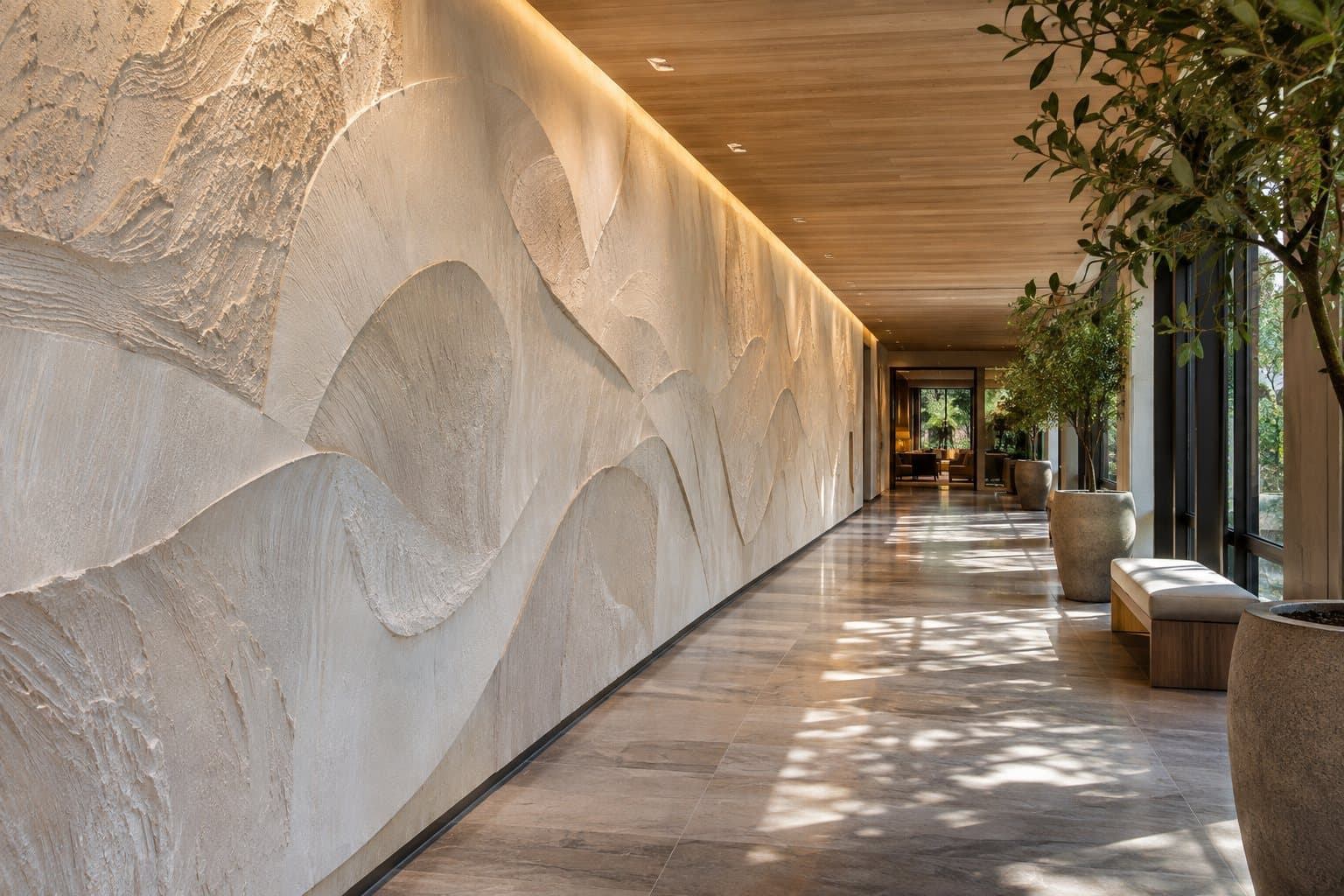
Wimberly Interiors' 2026 trends, reported by Hospitality Net, describe multisensory design, with acoustics, scent and light favored over spectacle, hyper-local materials, and wellness built in rather than added on. The same commentary describes art moving from hung pieces to built-in ones: sculptural walls and three-dimensional, site-specific installations that turn corridors, lobbies and stairwells into narrative passages.
For owners, this shifts art from a late decorative purchase to part of the architecture, which means it must be planned with the design team and the construction schedule.
“Art is moving from hung pieces toward built-in and site-specific work that turns corridors, lobbies and stairwells into narrative passages.”— The collector's note
What belongs in the brief?
A useful brief is short, specific and agreed by the owner, operator and designer before artists are approached. It typically covers:
- Property positioning, guest profile and the story the art should support
- The sequence of spaces: arrival, lobby, corridors, stairs, rooms and wellness areas
- Format by space: hung, built in, site-specific or commissioned
- Local materials, artists or makers the owner wants to involve
- Budget by phase, including fabrication, installation and contingency
- Approval path, schedule and contacts on the design and construction teams
- Maintenance, insurance, accessibility and life-safety requirements
How does procurement work for a hotel art program?
Procurement usually runs in stages: an art plan matched to the design drawings, a long list of artists and galleries, proposals with fabrication budgets, selection by the owner and designer, contracts, fabrication, installation and documentation. Commissioned work needs a written agreement covering scope, fee, schedule, ownership of the physical work, permitted reproduction for marketing, maintenance and what happens if the building is renovated.
Mock-ups and shop drawings reduce risk, especially for large built-in pieces. Coordination with the interior designer, architect and contractor decides whether a wall is ready for installation on the day the artist arrives.
What do built-in works change legally?
In the United States, 17 U.S.C. 106A gives authors of qualifying works of visual art rights of attribution and integrity, including the right to prevent intentional distortion or modification that would harm their honor or reputation. Section 113(d) addresses works incorporated in buildings. The integrity rights do not apply to a work that cannot be removed without damage if the author consented to installation in a written instrument signed by the building owner and the author acknowledging that removal may harm the work. If a work can be removed safely, the owner must give the author notice.
The practical step is to deal with removal and renovation in the commission contract, record the installation, and take legal advice, since not every work qualifies and other jurisdictions differ.
How do care and durability change in a hotel?
Hotel corridors and lobbies see touch, cleaning chemicals, luggage and light. Wellness areas add humidity and heat. NEDCC's leaflets on temperature, relative humidity and light damage give a starting point for thinking about these conditions, and a conservator, found through a body such as the American Institute for Conservation, can advise on materials and finishes before fabrication begins.
Housekeeping needs written cleaning instructions for each work, and the owner should keep spare material or a replacement plan for pieces likely to be damaged. These items belong in the operating budget from the start.
When is a built-in program the wrong choice?
Site-specific work is costly to change. It may not suit a property with a short lease, a likely rebrand, or franchise standards that dictate finishes. In those cases a hung or freestanding program, easier to move or sell, can be more sensible. The right answer depends on the owner's time horizon and the operator's rules, not on the trend.
Common questions
What should a hotel art brief include? It should set out the guest experience, the spaces and formats, budget by phase, approvals, schedule, rights and maintenance. Agreeing these with the designer and operator before approaching artists avoids costly changes.
What is site-specific art in a hotel? It is work made for a particular location, such as a sculptural wall, installation or built-in piece, rather than a work hung afterward. Hospitality design commentary for 2026 notes a move in this direction.
Who owns the rights to commissioned hotel art? The commission contract should say who owns the physical work and what reproduction is permitted. In the United States, 17 U.S.C. 106A may also give the author attribution and integrity rights, so legal advice is sensible.
SOURCES & NOTES
- 01Wimberly Interiors 2026 hospitality design trendsHospitality Net ? Accessed November 9, 2026
- 0217 U.S. Code 106A: Rights of certain authors to attribution and integrityLegal Information Institute, Cornell Law School ? Accessed November 9, 2026
- 0317 U.S. Code 113: Scope of exclusive rights in pictorial, graphic, and sculptural worksLegal Information Institute, Cornell Law School ? Accessed November 9, 2026
- 04Preservation Leaflets OverviewNortheast Document Conservation Center ? Accessed November 9, 2026
- 05Caring for BelongingsAmerican Institute for Conservation ? Accessed November 9, 2026
Educational editorial content reflecting the author's professional perspective. Not legal, tax, appraisal or investment advice. No specific artwork, seller or transaction paid for inclusion.
Full policy ↗